





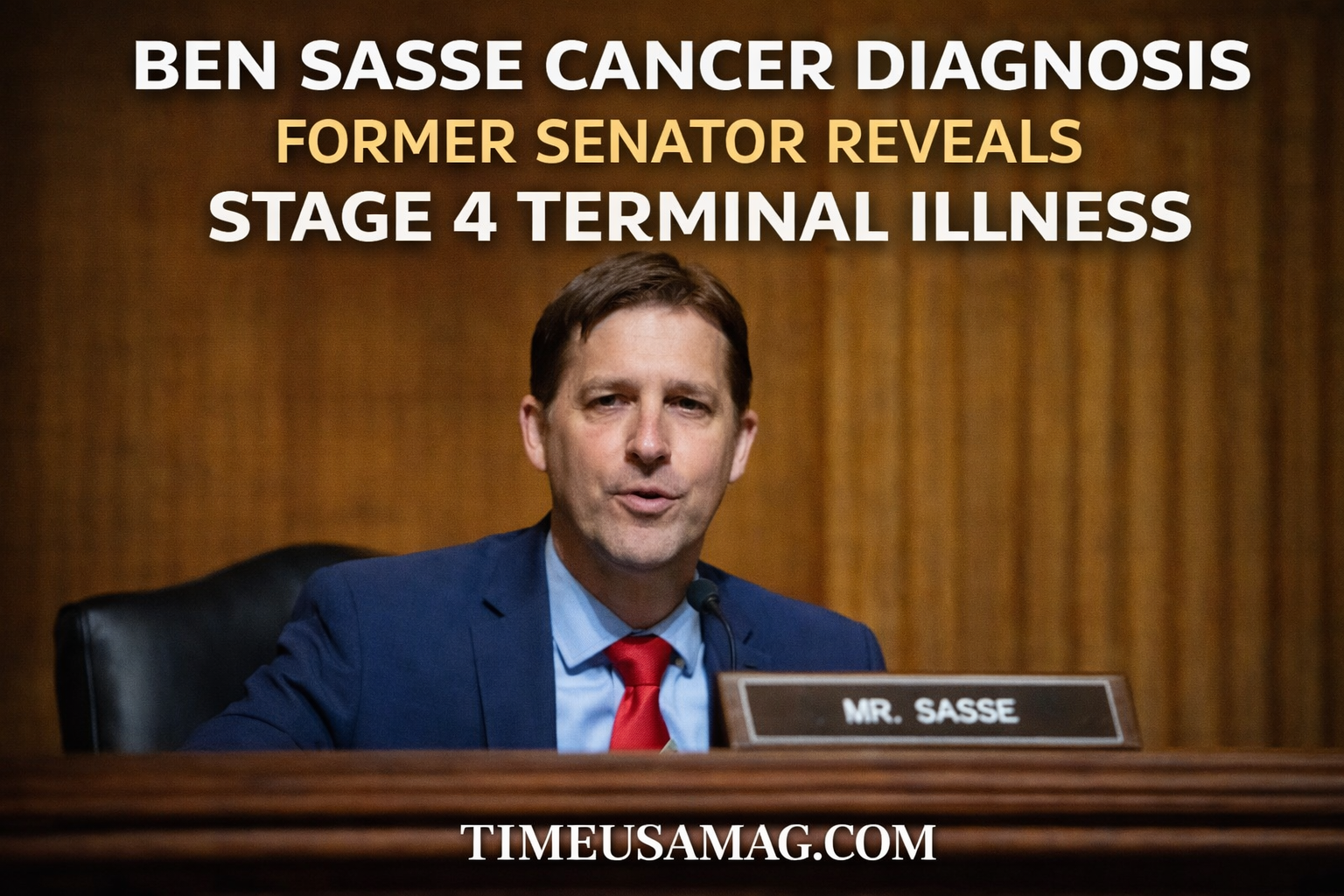
Ben Sasse announces stage 4 pancreatic cancer diagnosis, calling it a “death sentence.” Learn about the former senator’s health battle and political legacy.
Former United States Senator and ex-University of Florida president Ben Sasse shocked the nation on Tuesday, December 23, 2025, by announcing his diagnosis with stage 4 terminal cancer. The 53-year-old Republican leader shared the devastating news on social media, revealing he has metastasized pancreatic cancer and describing the diagnosis as a “death sentence.”
Ben Sasse Cancer Announcement Stuns Political World
In an emotional post on X (formerly Twitter), Ben Sasse delivered the heartbreaking news directly to his supporters and the American public. The former Nebraska senator’s candid announcement reflected his characteristic straightforward communication style that defined his political career.
“This is a tough note to write, but since a bunch of you have started to suspect something, I’ll cut to the chase: Last week I was diagnosed with metastasized, stage-four pancreatic cancer, and am gonna die,” Sasse wrote with stark honesty.
The Ben Sasse cancer diagnosis represents one of the most aggressive forms of the disease. Pancreatic cancer, particularly when it reaches stage 4 and has metastasized to other parts of the body, carries an extremely poor prognosis. Medical experts consider stage 4 pancreatic cancer terminal, with treatment focused on extending life and maintaining quality of life rather than achieving a cure.
Sasse’s decision to share his diagnosis publicly demonstrates his commitment to transparency, the same value he championed throughout his political career. By addressing speculation directly and honestly, he gave supporters accurate information rather than allowing rumors to circulate unchecked.
Understanding Ben Sasse’s Pancreatic Cancer Diagnosis
Pancreatic cancer ranks among the deadliest forms of cancer, often diagnosed at advanced stages because early symptoms are subtle or nonexistent. The pancreas, located deep in the abdomen behind the stomach, plays crucial roles in digestion and blood sugar regulation.
Stage 4 pancreatic cancer indicates the disease has spread beyond the pancreas to distant organs such as the liver, lungs, or distant lymph nodes. This metastatic spread significantly complicates treatment options and dramatically reduces survival rates.
According to the American Cancer Society, the five-year relative survival rate for metastatic pancreatic cancer is approximately three percent. This grim statistic explains why Ben Sasse described his diagnosis as a “death sentence” in his announcement. Most patients with stage 4 pancreatic cancer survive less than one year after diagnosis, though individual cases vary.
Common symptoms of advanced pancreatic cancer include jaundice (yellowing of skin and eyes), severe abdominal pain, unexplained weight loss, loss of appetite, nausea, and fatigue. However, many patients experience few symptoms until the cancer has already progressed to advanced stages.
Sasse’s Emotional Response and Family Support
Despite the devastating prognosis, Ben Sasse’s announcement reflected his philosophical approach to life and mortality. The former senator expressed profound gratitude for the support system surrounding him during this difficult time.
“I’m blessed with amazing siblings and half-a-dozen buddies that are genuinely brothers,” Sasse wrote in his social media post. “As one of them put it, ‘Sure, you’re on the clock, but we’re all on the clock.’ Death is a wicked thief, and (it) pursues us all.”
This perspective reveals Sasse’s attempt to contextualize his terminal diagnosis within the broader human experience of mortality. By acknowledging that everyone faces death eventually, he demonstrates resilience and acceptance rather than despair or bitterness.
Sasse’s emphasis on family and close friendships highlights the importance of strong support systems when facing serious illness. Research consistently shows that patients with robust social connections experience better quality of life and may even survive longer than those facing illness alone.
The former senator’s wife received her own challenging medical diagnosis recently. Sasse cited concerns about his wife’s epilepsy diagnosis as the primary reason for his resignation from the University of Florida presidency in 2024. This family health crisis preceded his own cancer diagnosis by roughly a year.
University of Florida Reacts to Sasse Health News
Leaders at the University of Florida expressed shock and sadness upon learning about Ben Sasse’s cancer diagnosis. The institution where he served as the 13th president from 2022 to 2024 issued statements honoring his service and expressing support during his illness.
Board of Trustees Chair Mori Hosseini and Interim President Dr. Donald W. Landry released a joint statement to the USA TODAY Network addressing the news. “We are shocked and saddened by the news of President Sasse’s illness,” they said. “This was staggering news. And yet, true to his character, Ben’s first instinct is to give comfort and reassurance to those of us who have known and admired him.”
The University of Florida statement highlighted Sasse’s character and his consistent concern for others even while facing his own mortality. This observation aligns with the tone of his public announcement, which balanced honesty about his prognosis with reassurance and philosophical reflection.
Sasse’s tenure at the University of Florida lasted approximately two years before he resigned in 2024, citing his wife’s epilepsy diagnosis as the determining factor. His presidency was marked by both achievements and controversies, as he worked to implement his vision for the institution while navigating campus politics and community expectations.
Ben Sasse’s Political Career and Legacy
Before leading the University of Florida, Ben Sasse built a distinguished career in American politics. He served as a United States Senator representing Nebraska, where he developed a reputation as an independent-minded Republican willing to challenge party orthodoxy when his principles demanded it.
Sasse earned national attention and respect from some quarters—while drawing criticism from others—for his willingness to stand against President Donald Trump on multiple occasions. His principled opposition to Trump distinguished him from many Republican colleagues who remained loyal to the president regardless of circumstances.
Challenging Trump’s Election Claims
Ben Sasse emerged as one of President Trump’s most vocal Republican critics, particularly regarding claims that the 2020 presidential election was rigged or stolen. While many Republicans either endorsed Trump’s election fraud allegations or remained silent, Sasse publicly denounced these claims as unfounded.
This stance required considerable political courage, as Trump maintained overwhelming support among Republican primary voters. Sasse’s willingness to contradict the president demonstrated his commitment to truth and democratic principles over partisan loyalty or political expedience.
Criticizing COVID-19 Response
Sasse also challenged Trump’s handling of the COVID-19 pandemic, which killed over one million Americans and disrupted society profoundly. The senator accused Trump’s leadership of falling short of acceptable standards during the crisis.
“The president’s leadership has not been reasonable or responsible,” Sasse stated, criticizing Trump’s pandemic response. This public rebuke from a sitting Republican senator signaled Sasse’s prioritization of public health and competent governance over party solidarity.
Impeachment Votes Define Political Courage
Ben Sasse’s most consequential political decisions came during President Trump’s two impeachment trials. His votes on these matters demonstrated his independence and willingness to face political consequences for principled positions.
During Trump’s second impeachment trial following the January 6, 2021, Capitol riot, Sasse voted to convict the president. Only seven Republican senators joined Democrats in voting for conviction, making this group a distinct minority within their party.
“Here’s the sad reality: If we were talking about a Democratic president, most Republicans and most Democrats would simply swap sides,” Sasse observed at the time. “Tribalism is a hell of a drug, but our oath to the Constitution means we’re constrained to the facts.”
This statement encapsulated Sasse’s frustration with partisan tribalism and his belief that constitutional obligations transcend party loyalty. His vote to convict Trump earned him both praise from Trump critics and severe backlash from Trump supporters.
Notably, Sasse had voted to acquit Trump during the president’s first impeachment trial in 2020, which focused on Trump’s interactions with Ukraine. This inconsistency suggests Sasse evaluated each impeachment case on its individual merits rather than adopting a blanket position on Trump’s conduct.
University of Florida Presidency: Achievements and Controversies
Ben Sasse left the U.S. Senate in 2022 to become the University of Florida’s 13th president, a transition that generated both excitement and concern within the academic community. His appointment process proved controversial, with some faculty members expressing reservations about his qualifications and selection.
Contentious Selection Process
Despite community opposition and a vote of no confidence from the UF Faculty Senate regarding his selection process, Sasse received unanimous approval from the school’s board of trustees. The Gainesville Sun, part of the USA TODAY Network, reported on the divided campus reaction to his appointment.
Critics questioned whether Sasse’s political background adequately prepared him for leading a major research university. Supporters, however, pointed to his academic credentials—including a Ph.D. in history from Yale University—and his experience in higher education administration.
Presidential Vision and Priorities
During his inaugural address, Sasse outlined his vision for the University of Florida, emphasizing practical education, transparency, and accountability. He promised to make practical majors “even more practical” and increase institutional transparency.
“I wasn’t looking for some university presidency, in general,” Sasse said at his inauguration. “Instead, I was persuaded. I was pursued and moved … telling me that this was not just a place, but a cause that I needed to join.”
This statement suggested Sasse viewed the UF presidency as a mission rather than merely a career move. His emphasis on being “persuaded” and “pursued” indicated he required convincing to leave the Senate for academic administration.
Campus Protest Controversy
One of the most controversial moments during Sasse’s brief tenure occurred in April 2024 during a pro-Palestinian demonstration on UF’s Plaza of the Americas. The university’s response to this protest generated significant attention and debate about free speech on college campuses.
Nine protesters were arrested and charged with various crimes, including failure to obey police orders, resisting arrest without violence, wearing a hood or mask on public property, trespassing, and felony battery. The aggressive response to the demonstration sparked discussions about appropriate boundaries for protest and the role of university administrations in managing campus activism.
Florida Governor Ron DeSantis visited the campus following the arrests and praised the university for its “swift action” and ability to “maintain order.” He contrasted UF’s response favorably with other universities’ handling of similar pro-Palestinian demonstrations.
This incident highlighted tensions between Sasse’s background as a senator who valued free speech and constitutional rights and his role as a university president responsible for campus safety and order. Critics argued the arrests were overly harsh and chilled free expression, while supporters maintained that the university appropriately enforced reasonable rules.
Sasse’s Resignation and Personal Health Crisis
Ben Sasse resigned from the University of Florida presidency in 2024, citing his wife’s epilepsy diagnosis as the primary reason for his departure. This decision came after approximately two years in the position and demonstrated Sasse’s prioritization of family over career advancement.
Epilepsy, a neurological disorder characterized by recurrent seizures, requires significant medical management and can profoundly impact family life. Sasse’s decision to step away from a prestigious position to support his wife during her health challenges revealed his personal values and commitments.
At the time of his resignation, neither Sasse nor the university disclosed that he was experiencing his own health concerns. His pancreatic cancer diagnosis came approximately a year after leaving the UF presidency, though the timeline of symptom onset and initial medical investigations remains unclear.
The sequential health crises affecting both Ben Sasse and his wife represent extraordinary challenges for their family. Dealing with serious illness requires enormous emotional, physical, and financial resources even for individuals with significant advantages like the Sasse family possesses.
Pancreatic Cancer: A Particularly Deadly Disease
The Ben Sasse cancer diagnosis has focused attention on pancreatic cancer, one of the deadliest forms of the disease. Understanding why this cancer proves so lethal helps contextualize Sasse’s grim prognosis.
Why Pancreatic Cancer Is So Deadly
Several factors contribute to pancreatic cancer’s poor survival rates. The pancreas’s location deep within the abdomen makes tumors difficult to detect during routine physical examinations. Unlike breast lumps or skin changes that patients might notice themselves, pancreatic tumors typically cause no symptoms until they grow large or spread.
When symptoms do appear, they often seem vague and non-specific: abdominal discomfort, loss of appetite, weight loss. Patients and doctors may initially attribute these symptoms to less serious conditions, delaying diagnosis until the cancer has advanced significantly.
Pancreatic cancer also tends to be biologically aggressive, growing and spreading more rapidly than many other cancer types. Even small tumors may have already metastasized to distant organs by the time of diagnosis.
Finally, pancreatic cancer often proves resistant to standard cancer treatments. Chemotherapy and radiation therapy, which successfully treat many other cancers, show limited effectiveness against most pancreatic tumors. Surgical removal offers the best chance for cure, but only 15-20 percent of patients have surgically removable tumors at diagnosis.
Stage 4 Prognosis and Treatment Options
Stage 4 pancreatic cancer, the diagnosis Ben Sasse received, indicates the disease has spread beyond the pancreas to distant organs. At this stage, cure is not considered possible with current medical technology.
Treatment for stage 4 pancreatic cancer focuses on palliative care—extending survival, managing symptoms, and maintaining quality of life for whatever time remains. Options may include chemotherapy to slow cancer growth, radiation therapy to shrink tumors causing symptoms, pain management, nutritional support, and psychological counseling.
Some patients pursue clinical trials of experimental treatments, hoping to access cutting-edge therapies not yet widely available. However, even experimental treatments rarely offer cure at this advanced stage.
The median survival time for stage 4 pancreatic cancer is approximately 3-6 months without treatment and 6-12 months with chemotherapy. A small percentage of patients survive longer, but multi-year survival at stage 4 is extremely rare.
Public Reaction and Support for Ben Sasse
Following Ben Sasse’s cancer announcement, expressions of support poured in from across the political spectrum. While Sasse faced criticism during his political career for his positions on various issues, his terminal diagnosis prompted an outpouring of sympathy and prayers.
Political colleagues, both Republicans who agreed with his Trump criticism and those who opposed it, expressed sadness about the news. Democrats who disagreed with Sasse on policy matters nonetheless acknowledged his integrity and principled approach to governance.
University of Florida students, faculty, and alumni—including some who had opposed his presidency—shared condolences and appreciation for his service to the institution. This response demonstrates how serious illness can temporarily transcend political and institutional divisions.
Sasse’s honest, direct communication about his diagnosis likely contributed to the sympathetic response. By acknowledging his mortality candidly rather than hiding behind euphemisms or false optimism, he invited genuine emotional connection with others.
Lessons from Ben Sasse’s Cancer Diagnosis
The Ben Sasse cancer diagnosis offers several important lessons for individuals, families, and society:
Health can change instantly. Sasse went from serving as a university president to receiving a terminal diagnosis in what seems like a remarkably short time. This reminds everyone to appreciate health while they have it and not postpone important life experiences.
Family matters most. Sasse’s resignation from UF to support his wife, followed by his emphasis on siblings and close friends in his cancer announcement, underscores that relationships ultimately matter more than professional achievements.
Honesty serves everyone better than euphemism. Sasse’s direct communication about his prognosis allows supporters to process reality rather than clinging to false hope. This honesty, while painful, shows respect for his audience.
Political differences pale before mortality. The bipartisan sympathy for Sasse demonstrates that shared humanity transcends political tribalism, at least in moments of genuine crisis.
Living with integrity matters. Sasse’s willingness to take unpopular positions based on principle throughout his career means he faces death knowing he remained true to his convictions, a comfort denied to those who compromise their values for expedience.
Looking Ahead: Sasse’s Final Chapter
As Ben Sasse faces his final months, he joins millions of Americans living with terminal diagnoses. How he navigates this period—whether he continues speaking publicly, focuses entirely on family, or pursues specific goals—remains his choice.
His philosophical approach to mortality, evident in his announcement, suggests he may continue offering perspectives on life, death, and what matters most. Alternatively, he may choose privacy to spend remaining time with loved ones away from public attention.
Whatever path he chooses, Ben Sasse’s legacy includes his principled political career, his brief university leadership, and ultimately his honest confrontation with mortality. His life reminds us that integrity, courage, and love for family and friends matter more than fame, power, or longevity.
The coming months will be difficult for Sasse, his family, and those who admire him. Stage 4 pancreatic cancer offers little hope for extended survival, but it cannot diminish the impact of a life lived with conviction and purpose.
Read More : James Cameron Slams Amy Poehler for Golden Globes Marriage Joke